Published:2026-08-27 09:00:00
Choosing among three motion platforms
Similar outlines do not mean the products solve the same problem
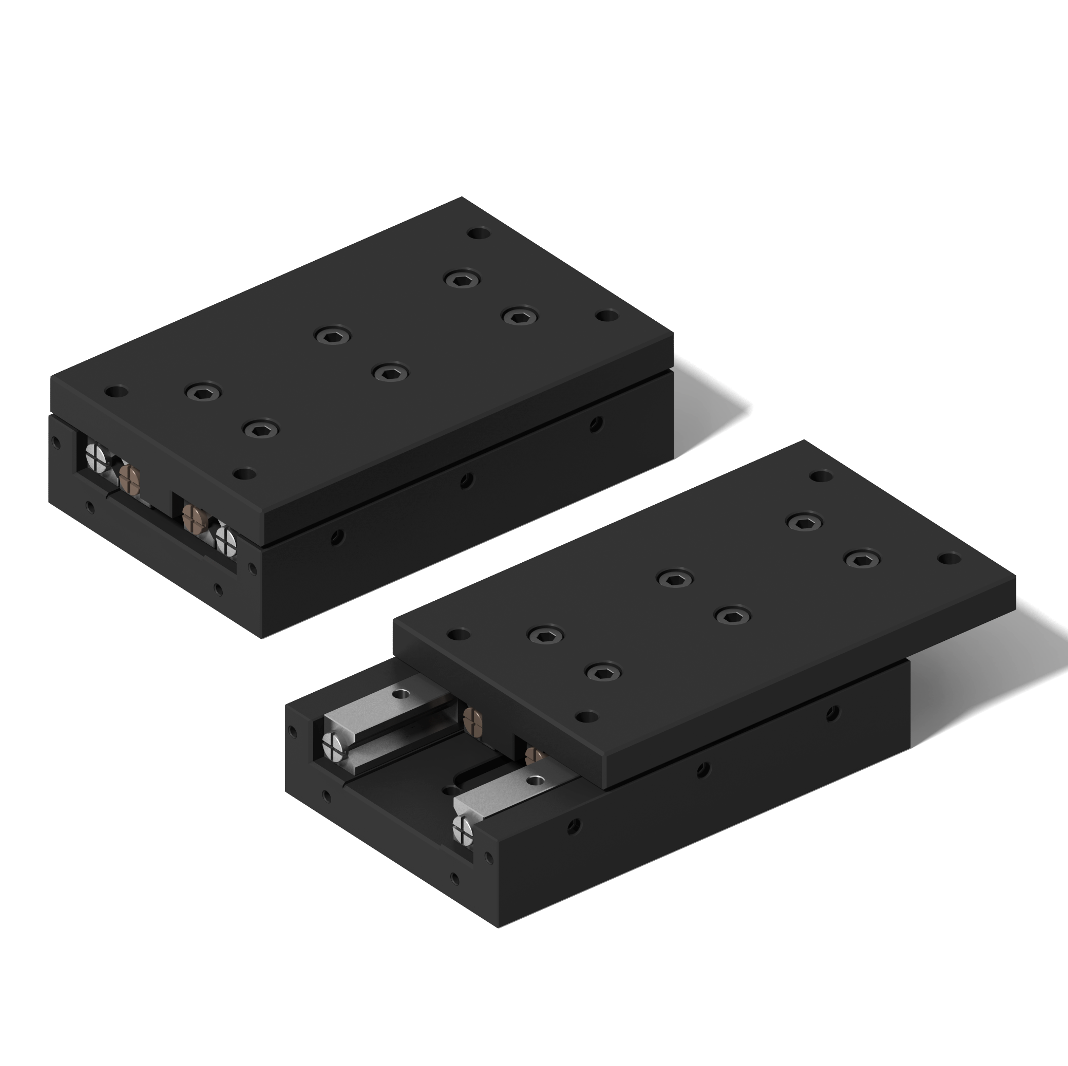
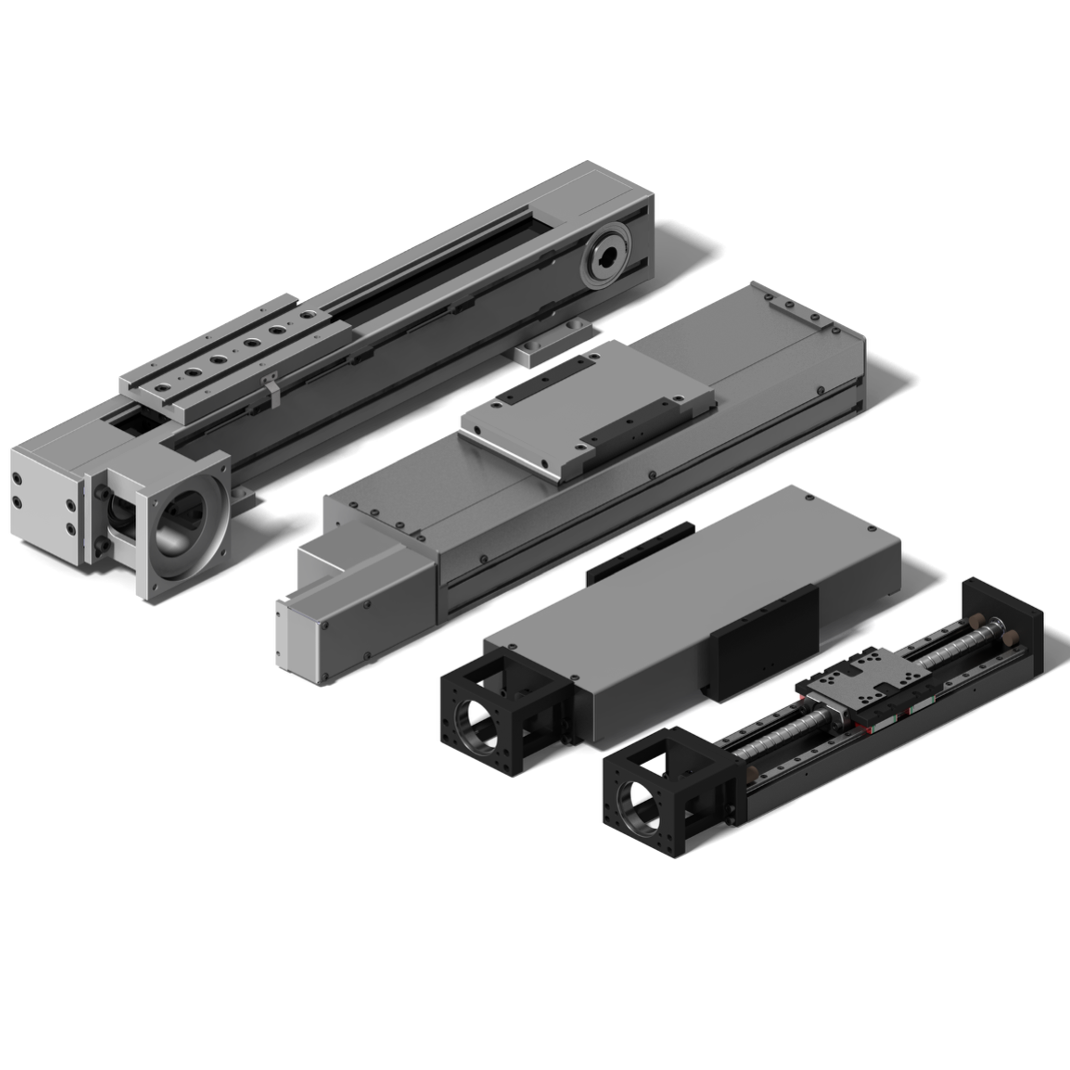
A CRU cross-roller stage prioritizes compact finite-stroke guidance and geometry. An HZM heavy-duty work table emphasizes rigidity, load, moment resistance and damping. A linear actuator integrates the drive, guide and interfaces into a standard automation axis.
01 / Product role first
The first question is whether the product must be a complete driven axis
A precision finite-stroke guide. Orthogonally arranged rollers provide multidirectional capacity, rigidity and smooth small motion in a compact section. Drive, feedback, limits and control remain system-design tasks.
A positioning platform built around a rigid base, dual linear guides and a precision ball screw. It suits larger tables, offset loads, process forces and duties sensitive to base deformation or vibration.
A standardized axis integrating a ball screw or timing belt, guide, end supports, motor interface and protection for longer travel, higher throughput and faster automation integration.
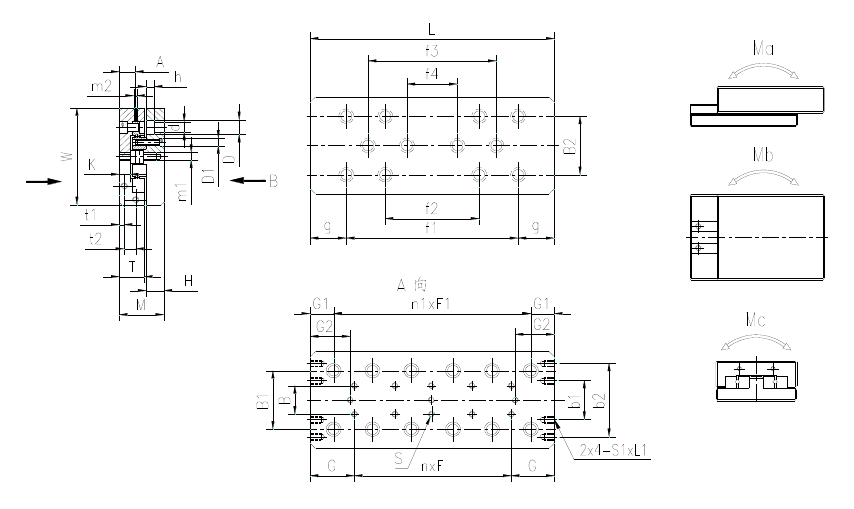
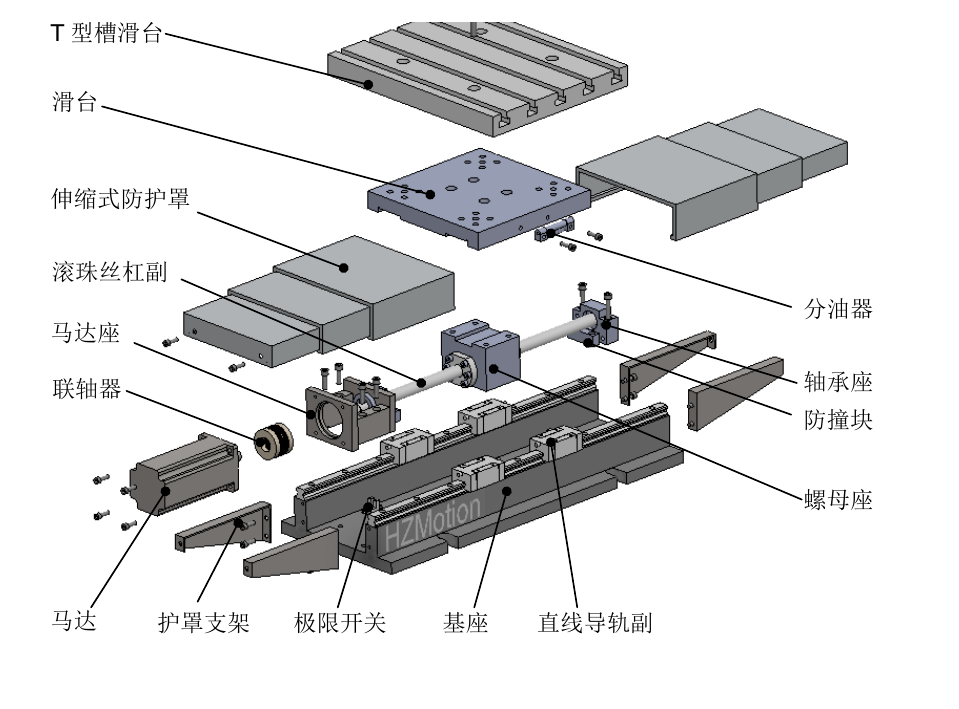
The delivery boundary drives engineering effort: choose CRU when a compact guide and custom drive are desirable; start with a worktable or linear actuator when the project should connect directly to a servo system.
02 / Engineering comparison
Put travel, rigidity, dynamics and integration on one sheet
| Criterion | CRU Cross-Roller Stage | HZM CNC Worktable | Linear Actuator |
|---|---|---|---|
| Product role | Compact finite-stroke precision guide | Heavy-duty ball-screw positioning platform | Standard integrated motion axis |
| Integrated drive | Normally requires an external drive | Precision ball screw | Ball screw, timing belt or series-specific drive |
| Local product travel | About 30–265 mm for CRU3/4/6 | About 100–1000 mm standard travel | Selected families up to about 2000–3700 mm |
| Accuracy focus | Guide geometry, smoothness and mounting surfaces | Positioning, repeatability, running parallelism and stability | Repeatability, speed, travel and family construction |
| Load and moments | Compact multidirectional support; verify C/C0 and Ma/Mb/Mc | Higher loads, moments, process forces and damping | Verify guide spacing, base, center of gravity and Mx/My/Mz |
| Speed | Depends on the external drive | Depends on screw, load, travel and model | Screw for positioning/thrust; belt for speed/long travel |
| Integration effort | High: drive, feedback, limits and interface | Medium: motor, covers and controls can be configured | Lower: standardized interfaces and accessories |
| Typical duties | Metrology, optics, precision adjustment, short-stroke inspection | Drilling, welding, dispensing, inspection, small CNC | Handling, assembly, sorting, loading and long-travel automation |
Family maxima cannot be combined freely: maximum travel, speed, load and accuracy usually come from different sizes or configurations. Verify the exact model, orientation and motion profile.
03 / Accuracy terms
Guide geometry, repeatability and absolute positioning are not interchangeable
What CRU micrometer data means
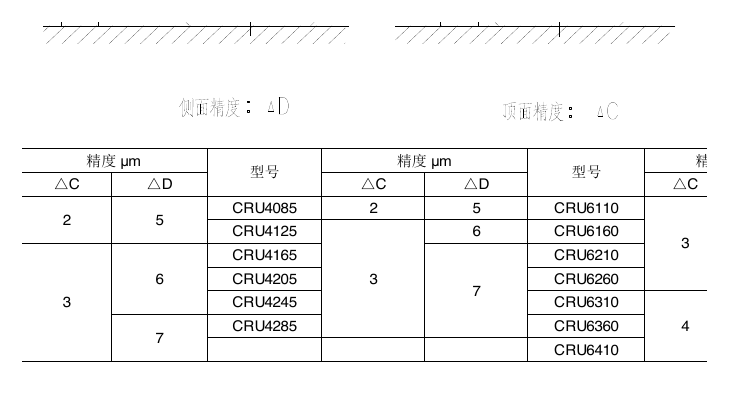
The HZMotion CRU page lists load, static moments and geometric values such as ΔC and ΔD. They describe the guide table. The external drive, feedback and control are not included, so these values cannot be renamed as motorized-axis repeatability.
What complete axes still need
Separate bidirectional repeatability, positioning accuracy, running parallelism, straightness, reversal error, minimum incremental motion and settling. Machining and inspection also depend on base deformation, heat, process force and vibration.
Start with CRU geometry, moments, drive and feedback.
Start with HZM base rigidity, guide span, screw and protection.
Start with actuator drive type, travel, cycle, accessories and multi-axis interfaces.
04 / Six-step selection
Define the task before allowing a model number into the shortlist
- Define the delivery boundaryGuide table only, or a complete axis with drive, supports, motor interface, limits and protection.
- Build the motion profileTravel, speed, acceleration, dwell, reversals and daily duty.
- Calculate load and momentsMoving mass, X/Y/Z center offsets, process force, cable drag and inertia force.
- Separate accuracy termsPositioning, repeatability, straightness, running parallelism, reversal and minimum increment.
- Check datums and environmentMounting flatness/parallelism, base rigidity, dust, chips, liquid, cleanliness and service access.
- Verify the actual modelTravel, speed, life, static moments, screw critical speed, motor torque, inertia and brake safety.
A payload figure alone is not enough. Center-of-gravity offset, process force and acceleration may make moments the first limit, while a weak mounting base can prevent a precision component from reaching catalog performance.
05 / Common mistakes
Mixing parameters from different system levels creates the wrong answer
Drive, feedback, mounting and control are still missing.
More moving mass increases motor, braking and cycle demands.
Center-of-gravity offsets and moments often become limiting first.
Travel, speed, load and accuracy maxima often belong to different models.
Surface geometry, fastening and base deformation enter final accuracy.
06 / Quick answers
Selection questions
Can a CRU be connected directly to a motor?
It can form a motorized axis with an external screw, voice coil or another drive, but the interface, feedback, limits, lubrication and control require design. Complete-axis accuracy cannot be copied from guide geometry.
Is a CNC worktable always more accurate than a linear actuator?
No. Grade, travel, screw, feedback, mounting and load state all matter. The worktable primarily provides more rigidity, load, moment and damping margin.
What should be checked first above one metre of travel?
A timing-belt actuator is often the first screen. For higher positioning or thrust, evaluate a screw actuator and its critical speed. Large process forces or a heavy table may point to an HZM worktable or custom structure.
Which product should make an XY platform?
HZM worktables suit larger tables and loads; actuators offer flexible modular combinations; CRU stages can be stacked only after stack height, moments, squareness, drive and feedback are verified.