Published:2026-08-16 09:00:00
Ball screw vs timing belt actuator
There is no universal winner—only a better match for the stroke and cycle
Timing belts usually make high speed and long travel easier, while ball screws generally favor repeatability and axial drive stiffness. Load must still be divided into drive thrust, guide capacity and carriage moments.
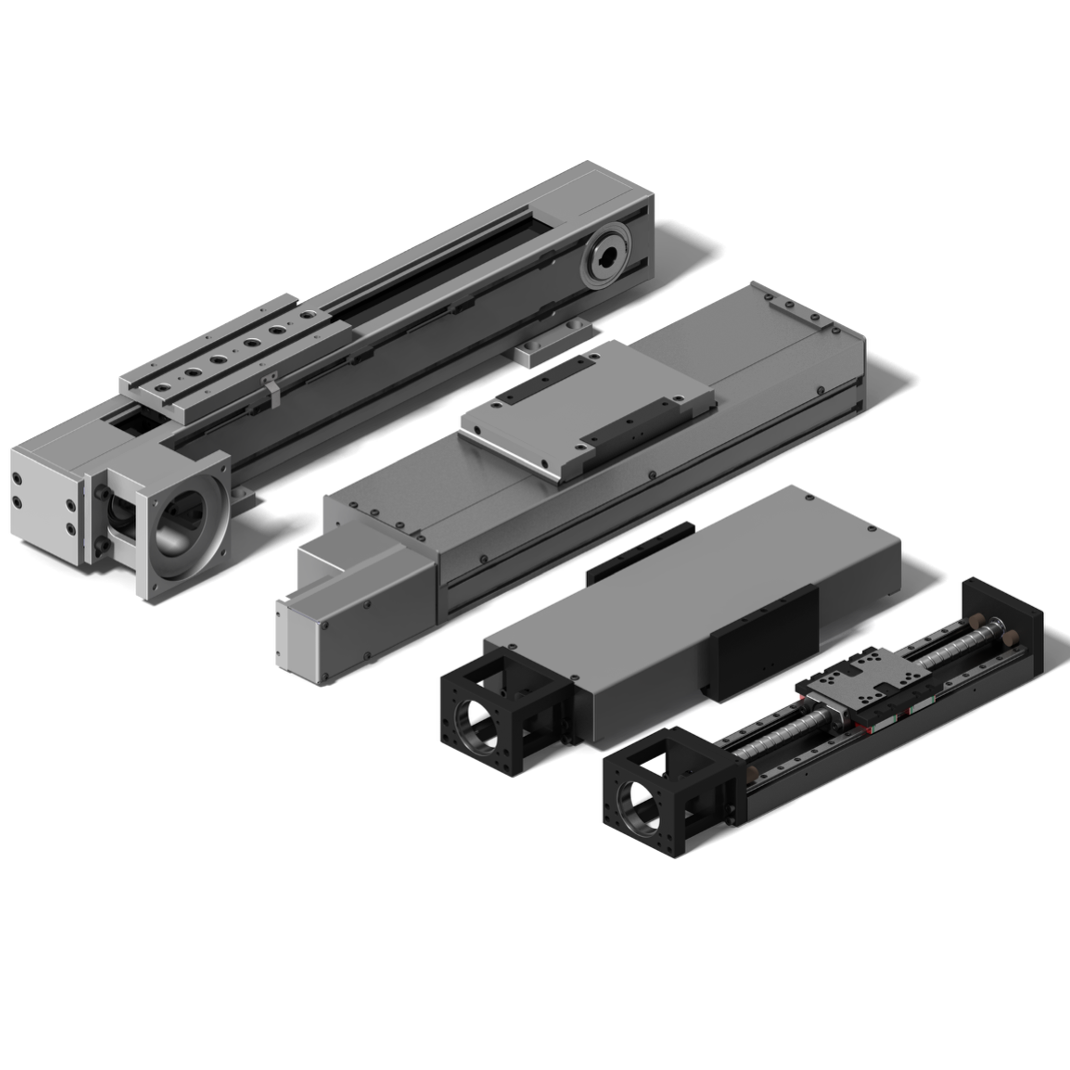
01 / Four first filters
Start with the motion task, then choose the drive
| Criterion | Ball screw actuator | Timing belt actuator | Also verify |
|---|---|---|---|
| Speed and acceleration | Depends on lead, screw rpm, critical speed and DN limit | Often suitable for higher linear speed and long transfer | Motor speed, ratio, payload and full profile |
| Repeatability | Generally favors small repeatability error and axial stiffness | Affected by belt compliance, pretension, pulleys and load change | Do not confuse repeatability with absolute accuracy |
| Travel | Long stroke needs screw diameter, span and critical-speed checks | Usually easier to extend to long travel | Base joints, belt vibration, cabling and covers |
| Drive thrust | Often used for higher process force and stiffness | Limited by belt width, tooth profile, engagement and tension | Guide Fy/Fz and carriage Mx/My/Mz |
| Environment | Lubrication, contamination, critical speed and heat | Tension, tooth condition, pulley alignment and belt aging | Dust, chips, liquid, temperature and access |
Catalog trends are not laws: screw supports, larger leads and special designs extend the screw boundary, while external feedback can change belt-axis positioning. Decide from the exact series and duty.
02 / Same-platform comparison
A common structure exposes the drive tradeoff
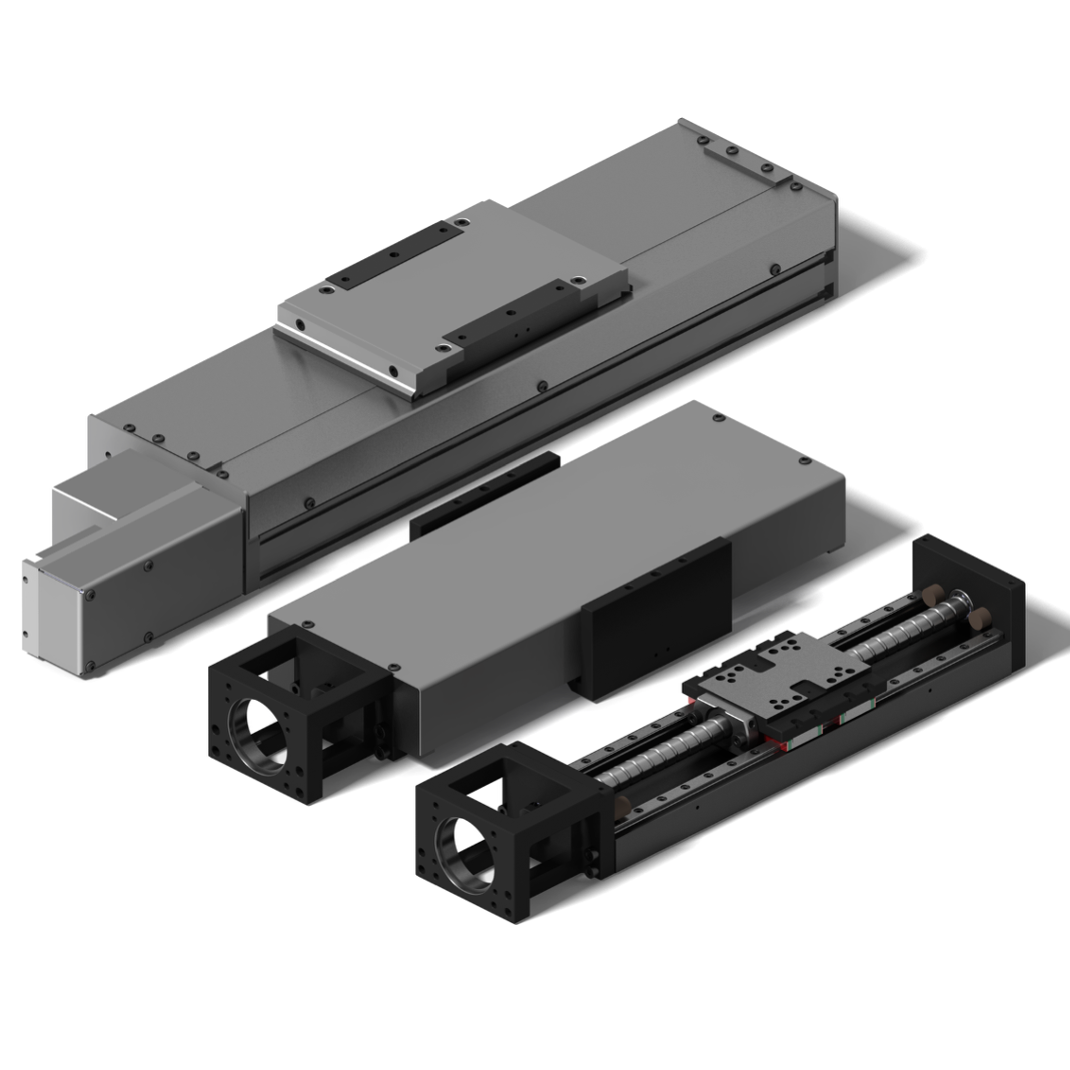
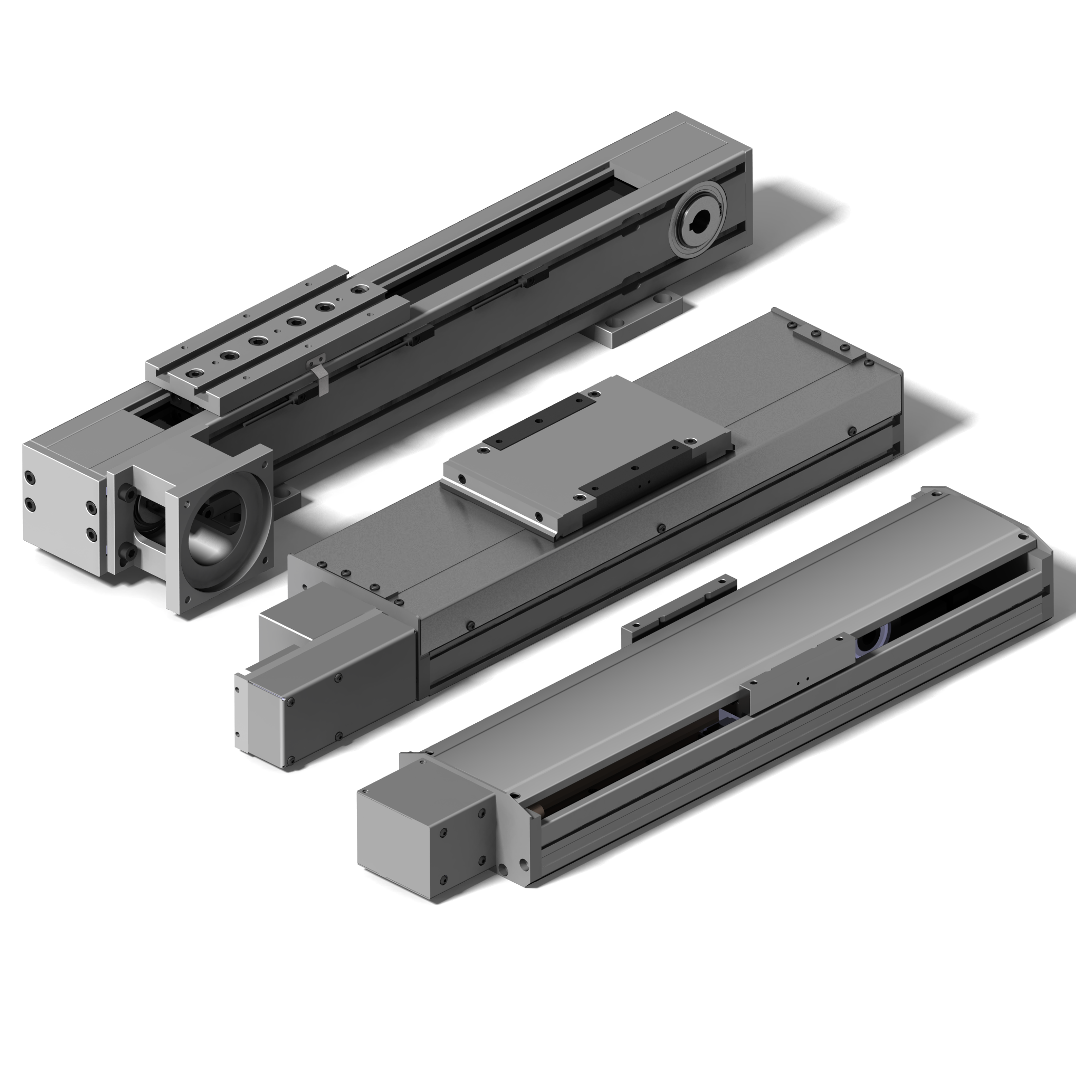
| HZMotion platform | Drive | Repeatability example | Speed example | Travel example |
|---|---|---|---|---|
| TKA | Ball screw | C grade ±0.01 mm; P grade ±0.005 mm | 1.5 m/s | 2000 mm |
| TKB | Timing belt | ±0.1 mm | 2 m/s | 3700 mm |
| TKS / TKS-B | Screw / belt | The same repeatability-speed-travel tradeoff | By size and configuration | By size and configuration |
Data boundary: these are family-level examples. One model does not necessarily achieve all maxima simultaneously; verify size, stroke, lead/ratio, orientation and load.
03 / Break down load
“How many kilograms?” is not a complete requirement
Covers acceleration, steady motion, process force and vertical gravity.
Moving mass and external force act on the guides; verify Fy, Fz and life.
Overhang and center-of-mass height create Mx, My and Mz, often before static mass becomes limiting.
Ball screw focus
Check acceleration force, duty load, screw life, lead, critical speed, support arrangement, nut and fixed-end bearing.
Timing belt focus
Check effective tension, tooth engagement, pretension, pulley bearings, belt stretch and reciprocating rate.
04 / Six-step selection
Put speed, accuracy, travel and load into one duty sheet
- Define the profileStroke, cycle time, maximum speed, acceleration time, dwell and cycles per minute.
- Define positioningSeparate repeatability, absolute accuracy, minimum increment, settling and load-dependent error.
- Break down the loadMoving mass, process force, orientation, center of mass, overhang and Mx/My/Mz.
- Verify the driveFor screws: critical speed, DN, lead and axial life. For belts: tension, engagement, stretch and pulleys.
- Verify guides and baseStatic/dynamic capacity, life, rigidity, mounting surface and multi-axis arrangement.
- Size the motor lastSpeed, peak and RMS torque, inertia, regeneration and mechanical interface.
05 / Common mistakes
Four catalog maxima cannot be combined at will
False as an absolute statement; structure, pretension, feedback, control and load all matter.
Drive thrust, guide load and carriage moment are different limits.
Accuracy, process force, speed and supported-screw options still matter.
A short stroke may never reach it; the full acceleration profile determines cycle time.
Payload, moments, heat, belt compliance and mounting datums change system results.
06 / Quick answers
Screw and belt actuator questions
Does high speed automatically mean a timing belt?
No. Stroke, repeatability, process force and environment still matter. A correctly supported, larger-lead screw can be fast within critical-speed and DN limits.
Can a belt actuator be mounted vertically?
Only if the selected family and configuration permit it. A separate falling-load, brake, belt-load and safety assessment is still required.
Why can guide load be similar while drive type differs?
The guides and base carry much of the external load. The drive mainly changes force transmission, speed, travel, stiffness and transmission error.